
Amid escalating tensions with Iran, President Trump is urging nations dependent on Middle Eastern oil to deploy warships to the Strait of Hormuz to safeguard critical global energy supplies.
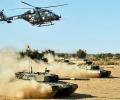
'And this will persist given the two-and-a-half-front threat we face.'

There are enough people at the top decision-making level in Tehran who are still willing to negotiate, provided Trump can create the right setting for the negotiation to acquire a dynamic of its own, points out Ambassador M K Bhadrakumar.

The automobile industry has sought government support in expediting approvals from the Chinese government for importing rare earth magnets used in various applications, including passenger cars. As per the industry sources, various domestic suppliers have already sought approval from the Chinese government through their local vendors in China.

Activist Gurjeet Singh Khalsa ended his 560-day protest atop a BSNL tower after the Punjab government notified a stricter anti-sacrilege law. Khalsa had been demanding stricter laws against sacrilege incidents in Punjab.
The State Bank of India (SBI), in its research, has estimated GDP growth during the current financial year (2024-25) to be 6.3 per cent, assuming that the NSO does not make major revisions to the erstwhile first and second quarter estimates.

Foreign investors fled Indian equities in 2025 at a scale never seen before, pulling out a record Rs 1.6 lakh crore (USD 18 billion) as volatile currency movements, global trade tensions, especially potential US tariffs, and stretched valuations eroded risk appetite, though flows are expected to turn sustainably positive in 2026.

What we are watching is something different: A fog manufactured and maintained by the people who started the war, so that the question of why it was started never has to be answered, observes Prem Panicker in his must read blog on the war in the Middle East.

A 500 per cent tariff would effectively shut out India's goods and services exports to the US.

'It would be similar to what happened during COVID-19.' 'They are not just losing income, but being pushed into distress.'

Indian eateries are adapting to the LPG crisis by cutting menus, increasing prices, and switching to alternative fuels like coal, as LPG supplies are disrupted due to global events. State authorities are cracking down on hoarding and black marketing of LPG cylinders.

Audi plans to focus the Indian market, including deepening market penetration and increasing sales volume.

China accounts for about 70 per cent of global rare earth mining and nearly 90 per cent of rare earth magnet production, making it a dominant player and giving it significant leverage in global supply chains.
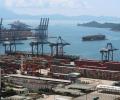
With the Iran war escalating sharply and crisis deepening in the global energy market, India on Monday unveiled a coordinated plan to support exporters and shippers caught in the fallout.

When missiles fly in this region, they are never just aimed at military targets.

Israel has for more than two decades and several US presidencies worked to draw the United States into a full-scale war with Iran. Having finally achieved that, the last thing it wants is Trump declaring victory and going home, as he is prone to do. Ali Larijani was the figure most capable of handing Trump a negotiated exit with something to show for it. Without Larijani, the road to an exit gets considerably narrower. Prem Panicker continues his must read daily blog on the Gulf War.

Ratings firm Crisil said on Wednesday that the uncertainties surrounding the US tariffs might be a new hindrance to capital expenditure decisions in the current financial year. The additional 25 per cent tariff imposed by US President Donald Trump on India for its purchases of Russian oil came into effect on Wednesday, bringing the total amount of levies imposed on New Delhi to 50 per cent.

Trump may strike. He may announce productive talks and extend again. He may do both at the same time. Iran will not open the Strait on someone else's terms, so no matter what happens, that problem will remain unsolved. And the IRGC will still be collecting its $2 million toll from every ship bold enough to ask permission to pass.
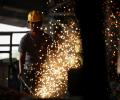
Since India relies heavily on specialised imported fasteners for critical applications in industries, such as automobiles, aerospace, electronics, and defence, their sudden unavailability will jeopardise production.

Alliances fight wars effectively only when they share an endgame. If Israel acted without US knowledge, then the military alliance is operating without real coordination at the level of strategic targeting. Neither picture is reassuring in a war that is no longer regional in its consequences. Prem Panicker continues his must read daily blog on the Gulf War.

The question is no longer whether the war will expand. It has. The next few days will tell us whether the war stabilises around Hormuz or whether the Strait itself becomes the trigger for a far larger rupture. What to watch for over the next 48 hours is simple: Any move by the US toward direct naval control of the Strait; any credible Iranian attempt to disrupt or mine shipping lanes and, critically, whether energy infrastructure in the Gulf continues to be targeted.If those lines are crossed in tandem, the war will no longer be containable within the region.

Being touted as a competitor to the country's busiest Delhi airport -- which handles approximately 1,200 flights a day -- the Noida airport was expected to start flight operations by the end of this year. But supply-chain disruption, caused by pandemic and subsequent global upheaval, has hit the pace of construction at the airport which is coming up in the Jewar area of UP's Gautam Budh Nagar, some 75-km from the Delhi airport.
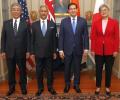
The Quad grouping has called for bringing the perpetrators, organisers and financiers of the Pahalgam terror attack to justice without any delay and urged UN member nations to extend cooperation for it.

This weekend, Donald Trump has begun to say the quiet part out loud -- that he wants to take control of Iran's oil, a formulation more in line with his robber-baron style of international relations.
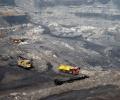
The 17 rare earth elements that are at the centre of the current crisis are critical components of everyday products -- from cars to jet engines to electronics like smartphones and flat-screen TVs.

With the rapid evolution of channels like quick-commerce and the emergence of ONDC, the Indian retail industry is 'cautiously optimistic' for 2025, in which new-age technologies such as AI and automation will play a crucial role, driving efficiency and personalisation.

In a world fractured by uncertainty, India stands out for its policy consistency, paired with sustained ambition, points out Pritam Banerjee.
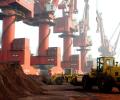
Inventories of rare earth magnets used in critical automotive components - particularly electric vehicle (EV) traction motors and power steering systems - could run dry by mid-July this year, according to rating agency Icra.

After a record-breaking year, India's automobile industry is entering 2026 on a relatively strong footing, with sales growth expected in the 6-8 per cent range. The outlook is underpinned by policy support, including GST rationalisation, easing monetary conditions, and income tax relief, which together are likely to improve affordability and sustain consumer demand across vehicle segments.

Representatives Deborah Ross of North Carolina, Marc Veasey of Texas and Raja Krishnamoorthi of Illinois introduced the resolution on Friday in the House of Representatives to terminate Trump's national emergency authorising tariffs of up to 50 per cent on imports from India, helping to restore Congress' constitutional authority over trade.

China's export curbs on critical minerals crucial for India's electronics sectors are no longer mere warnings but a wake-up call for New Delhi, underscoring the need for urgent measures like reverse-engineering of low- to mid-tech imports to cut overreliance on Beijing, think tank GTRI said on Thursday.

India's handling of the Iran crisis reflects a growing strain between strategic autonomy and geopolitical alignment, observes Ambassador M K Bhadrakumar.

By all available indications, the White House drafted a face-saving note and handed it, ready-made, to Islamabad. Pakistani Prime Minister Shehbaz Sharif was supposed to then post it in the guise of a plea urging Trump to extend the deadline by two weeks 'to allow diplomacy to run its course'. Trump would then graciously accept Pakistan's 'request' and declare a ceasefire. Sharif dutifully posted the message on X. Except that he, or whoever was handling the account, forgot to delete the tell-tale first line visible in the edit history: 'Draft - Pakistan's PM Message on X'. Prem Panicker's must read blog on the Iran War.
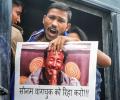
The Centre and the Union Territory of Ladakh administration have accused jailed climate activist Sonam Wangchuk of attempting to instigate Gen Z for protests, drawing parallels to unrest in Nepal, Bangladesh, and the Arab Spring.

Police on Saturday claimed to have busted a Pakistan-linked narcotics racket with the arrest of two peddlers here with three kilograms of heroin, valued at around Rs 15 crore.

'The coronavirus epidemic highlights the need to start thinking more actively about multilateral coordination, including, but not confined to, health emergencies and climate uncertainties,' says Rathin Roy.

'As the global economy undergoes significant transformations in 2025, India's ability to navigate the complexities of trade wars, financial realignments, and emerging blocs will be pivotal,' explain Harsh V Pant and Soumya Bhowmik.
The Foxconn move may have been prompted by the Chinese government's focus on strengthening its supply chain.

Global rating agency Moody's on Monday said the high commodity prices and supply chain disruptions due to further escalation in the Russia-Ukraine crisis could expose about 42 per cent of rated Indian companies to significant risks. They are mainly in the oil and gas and automotive sectors. The impact may be seen under two scenarios: first, revised base line and second being downside economic scenarios incorporating a global recession and a more severe liquidity squeeze, it said. The military conflict between Russia and Ukraine is impacting companies in Asia Pacific, adding to existing challenges from supply chain disruption and the coronavirus pandemic.

At the heart of this debate is Section 3(d) of the Patents Act, a safeguard designed to prevent drugmakers from extending monopoly protection through trivial modifications to existing medicines.
